Pumps & pressure6 min read
7 Signs Your Well Pump Is Failing
Pumps rarely die without warning. Here are the seven signals that show up first — and which ones mean call today rather than next month.
Jesse Contreras
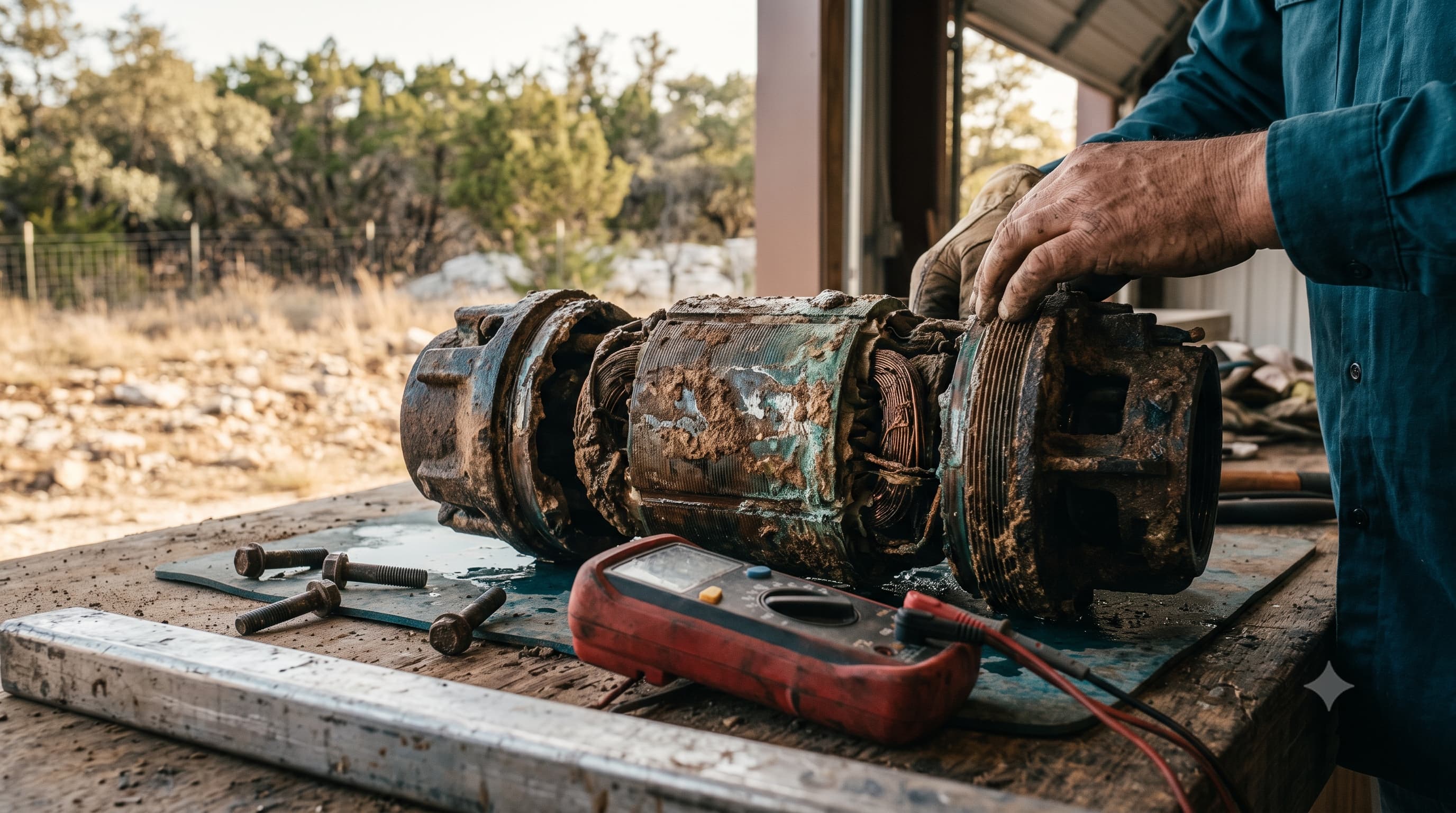
In twenty-two years of pump work I have almost never met a pump that failed without telling somebody first. The signals are usually there for weeks. The trouble is that they're easy to normalize — you get used to the pressure being a bit off, and then it's Sunday night and there's no water at all.
1. Pressure that's dropped off
The most common first sign. Showers get weaker, especially upstairs or at the far end of the house. Before you blame the pump, check the pressure gauge and the tank — a tank that has lost its air charge produces exactly this symptom and costs a fraction to fix.
2. Air spitting from the taps
Sputtering and coughing at the faucet means air is getting into the system. That can mean the water level in the well has dropped below the pump intake, or that there's a leak in the drop pipe. Neither fixes itself, and both get worse.
3. The pump runs constantly
If you can hear it running and it never shuts off, the system can't reach cutoff pressure. Causes range from a leak somewhere in the line, to a worn pump that no longer builds head, to a stuck pressure switch. Continuous running will destroy a pump motor, so this one is worth a same-week call.
4. Rapid cycling — on, off, on, off
Open a tap and listen. If the pump kicks on and off every few seconds, your pressure tank has almost certainly lost its air charge and the pump is doing all the work with nowhere to store pressure. This is the single most common cause of premature pump death in Central Texas, and the fix is usually the tank, not the pump.
5. Your electric bill jumped
A pump that runs longer or cycles more draws more power, and it shows up on the bill before it shows up at the tap. If nothing else in the house changed and the bill did, look at the well.
6. Muddy, sandy or suddenly cloudy water
Sediment where there wasn't sediment before can mean the well is drawing down far enough to pull from near the bottom of the hole, or that the casing or screen has been compromised. Sand is abrasive; it destroys impellers. Don't wait this one out.
7. Breakers tripping
A pump that trips its breaker is drawing more current than it should. That's a failing motor, a wiring fault, or a pump that's binding. Resetting a breaker repeatedly is not a fix — it is a fire risk. Call somebody.
What to check before you call
- Check the breaker for the well circuit — but don't keep resetting it if it trips again
- Look at the pressure gauge if you can do so safely, and note the reading
- Note whether the problem is at every tap or just one
- Note when it started and whether anything changed — storm, power outage, new appliance
Those four facts let us narrow the problem down on the phone, and often mean the truck arrives with the right part already on it.
How long should a pump last?
Eight to fifteen years is typical here. Hard water, sand, undersized wiring, and above all rapid cycling all shorten it. If you want a pump to reach the top of that range, keep the pressure tank properly charged — it's the cheapest life insurance a pump can have.
“Most of the pumps I replace didn't wear out. They were cycled to death by a tank nobody checked.”