Water quality6 min read
Iron in Well Water: Why It Stains and How to Fix It
Orange stains on the sink, rust in the laundry, a metallic taste. Here's what's actually happening and which treatment removes it.
Cody Sterling
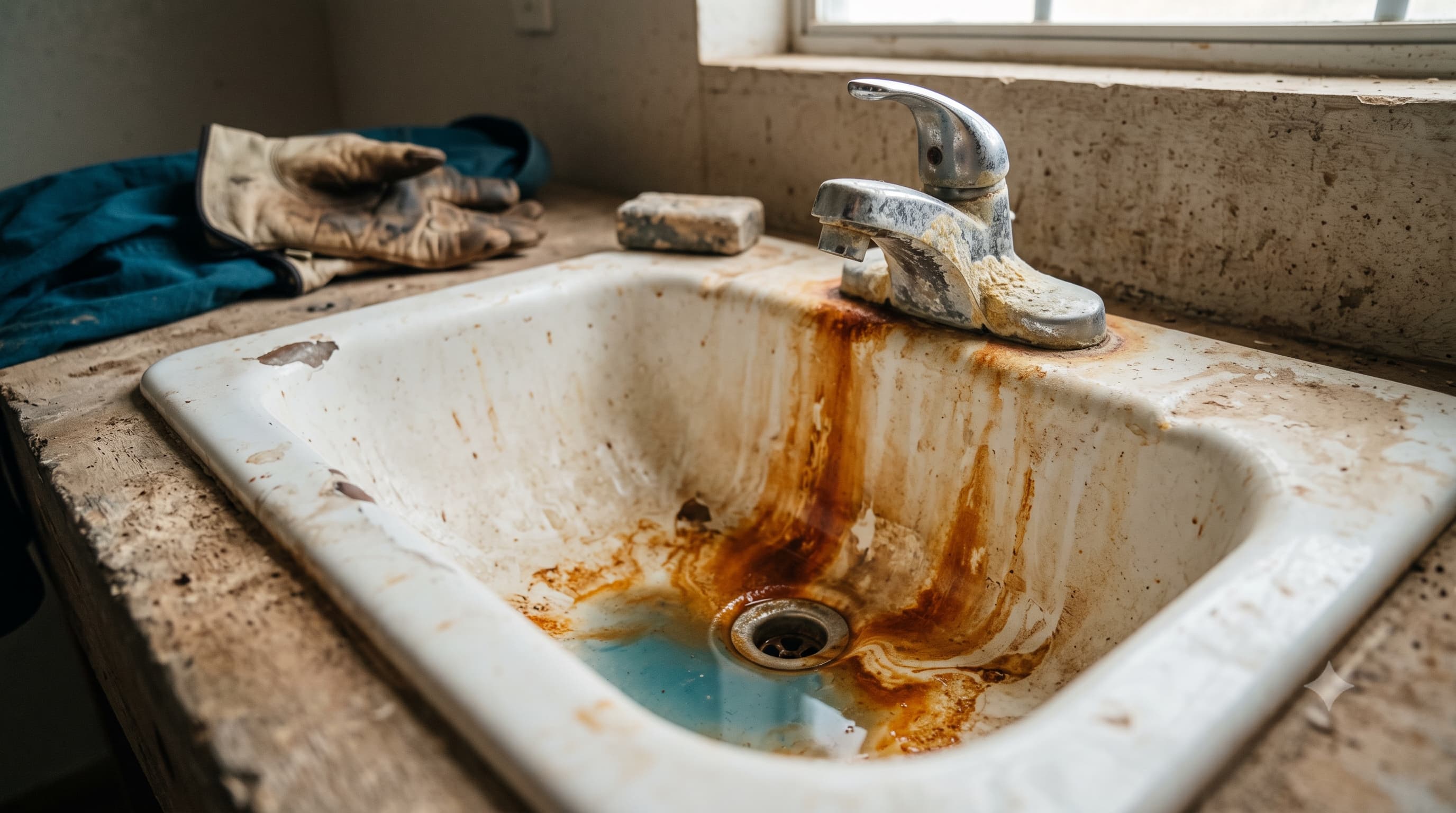
Iron is the most common water quality complaint we hear, and it's also the one most often treated with the wrong equipment. A softener will not fix a real iron problem. Understanding why takes about four minutes and can save you a couple of thousand dollars.
Where the iron comes from
Iron is one of the most abundant elements in the earth's crust. Groundwater moving through rock and soil dissolves it. There's nothing wrong with your well — the iron was in the ground before the well was, and in most Central Texas formations there's some amount of it.
The EPA classifies iron as a secondary contaminant, meaning it's regulated for aesthetics rather than health. It will not hurt you. It will ruin your laundry, stain every fixture in the house, and make coffee taste like a handful of pennies.
The three kinds of iron, and why it matters
Ferrous — "clear water" iron
Dissolved in the water and invisible at the tap. Fill a glass and it looks fine; leave it on the counter for an hour and it turns orange as the iron oxidizes on contact with air. This is the most common type in our area.
Ferric — "red water" iron
Already oxidized before it reaches you. The water comes out of the tap visibly orange or with rusty particles in it. Often means iron is oxidizing inside your plumbing or the well itself.
Iron bacteria
Bacteria that metabolize iron and leave behind a reddish-brown slime. The giveaway is a greasy film in the toilet tank, a swampy smell, and clogging that keeps coming back after you clean it. This one needs shock chlorination, not just filtration.
What actually removes it
| Concentration | Type | Right treatment |
|---|---|---|
| Under ~0.3 ppm | Ferrous | Often nothing needed; a softener will handle it |
| 0.3 – 3 ppm | Ferrous | Softener may cope, but an oxidizing filter is safer |
| 3 – 10 ppm | Ferrous or ferric | Oxidation-filtration ahead of the softener |
| Over 10 ppm | Any | Aeration plus filtration, sometimes staged |
| Any | Iron bacteria | Shock chlorination first, then continuous treatment |
Why a softener alone usually isn't the answer
A water softener removes iron by ion exchange, the same mechanism it uses on calcium. It works — up to a point. Past a low concentration, iron fouls the resin bed, the softener stops softening, and you've now got hard water and iron. Cleaning it out is a job; replacing the resin is a bigger one.
The right sequence for a house with real iron is oxidation-filtration first, softener second. The filter takes the iron out; the softener then only has to do the job it's designed for.
The rotten-egg smell is a different problem
Sulfur smell is hydrogen sulfide gas, not iron — though the two very often show up together because the same conditions produce both. Some oxidizing filters handle both at once, which is why it's worth testing for both before buying anything.
What to do about the stains you already have
- Use a rust remover, not chlorine bleach — bleach oxidizes iron and sets the stain permanently
- Treat laundry with a rust-removing additive before it goes through a hot dryer
- Fix the water first; otherwise you're cleaning the same stains forever
If your water is staining, get it tested. We'll pull a sample, send it to a certified lab, and walk you through what came back in plain language — including telling you if the answer is that you don't need equipment at all.